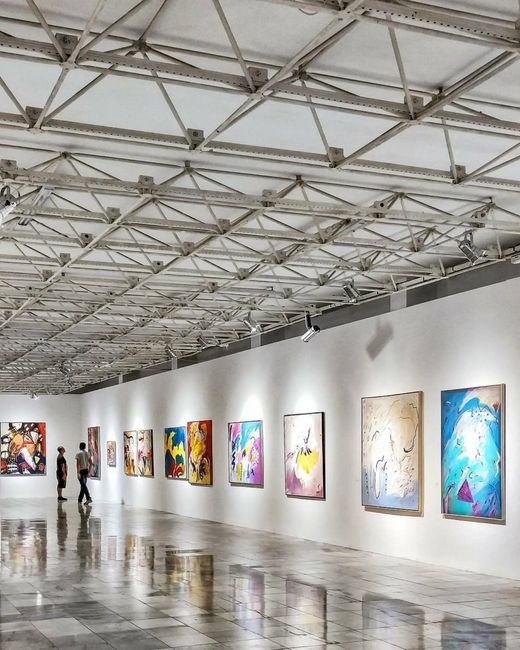
Dulwich Picture Gallery fragile art removals done right
Moving fragile art is one of those jobs that looks straightforward from a distance and then, very quickly, reveals how much can go wrong. A frame catches on a doorway. A corner chips. A canvas shifts in transit by a few millimetres and suddenly you are dealing with more than just a move. If you are planning Dulwich Picture Gallery fragile art removals done right, the aim is not simply to get objects from A to B. It is to protect condition, value, provenance, and peace of mind at every step.
That sounds serious because it is. Whether the pieces are exhibition loans, archival works, delicate framed prints, sculpture components, or museum-quality objects, the handling standards need to be calm, careful, and methodical. In this guide, we will look at how fragile art removals should work, what good practice actually looks like, and where the hidden risks tend to appear. We will also cover practical choices around packing, transport, storage, and supplier selection, so you can make a proper decision rather than a hopeful one.
For readers comparing removal support more broadly, it can also help to understand how specialist moving teams approach protection, scheduling, and vehicle choice. Services such as removal services, packing and boxes, and storage often sit alongside fragile-item work when a collection needs a careful, staged move. Not glamorous, perhaps. But absolutely necessary.
Expert summary: fragile art removals are won or lost before the vehicle even arrives. The best moves are planned around protection, timing, trained handling, and a clear chain of responsibility.
Table of Contents
- Why Dulwich Picture Gallery fragile art removals done right Matters
- How Dulwich Picture Gallery fragile art removals done right Works
- Key Benefits and Practical Advantages
- Who This Is For and When It Makes Sense
- Step-by-Step Guidance
- Expert Tips for Better Results
- Common Mistakes to Avoid
- Tools, Resources and Recommendations
- Law, Compliance, Standards, or Best Practice
- Options, Methods, or Comparison Table
- Case Study or Real-World Example
- Practical Checklist
- Conclusion
- Frequently Asked Questions
Why Dulwich Picture Gallery fragile art removals done right Matters
Fragile art is not forgiving. A standard household move might tolerate a bit of jostling, a narrow stairwell, or a rushed timetable. Art really won't. The margin for error is tiny, and the consequences can be expensive, visible, and in some cases irreversible.
For a gallery environment, the stakes are even higher because the object is rarely just an object. It may be part of a curated display, a loan agreement, a conservation record, or a public-facing collection with exacting handling expectations. Once a piece is damaged, the conversation shifts from logistics to conservation, insurance, and sometimes reputational fallout. No one wants that. No one.
There is also the practical reality of London moves. Tight access, limited loading space, stairs, mixed-use buildings, variable weather, and busy roads all add friction. Even a short journey across South London can introduce vibration, moisture, and timing pressure. That is why fragile art removals need to be treated as a specialist process rather than a general removal job with a bit of extra bubble wrap thrown in at the end.
Done properly, the process protects:
- surface finishes from abrasion and pressure marks
- frames, mounts, and glazing from impact
- the physical stability of canvases, sculptures, and mixed-media pieces
- the schedule for installation, exhibition turnover, or storage handover
- the confidence of curators, artists, collectors, and facility teams
That confidence matters more than people sometimes admit. When a piece is delicate, you can feel the tension in the room; the quiet, careful voices, the sudden awareness of every door handle and threshold. A proper removal team lowers that tension by making the move look almost boring. That is the goal, frankly.
How Dulwich Picture Gallery fragile art removals done right Works
The best fragile art removals follow a sequence, not a scramble. Good teams start by understanding the object, then work backwards from the destination, the route, and the handling limits. In practice, the move is built around assessment, protection, transport, and controlled delivery.
1. Pre-move assessment
This is where the real thinking begins. A team should identify dimensions, weight, fragility points, glazing type, frame condition, and any previous damage that may affect handling. A large framed work with loose edging behaves differently from a solidly mounted object, and a sculptural piece may need a completely different cradle or support method. The more precise the assessment, the safer the move.
2. Custom packing and wrapping
Fragile art should be packed to suit the item, not to suit the nearest box. That may mean archival tissue, corner protection, foam padding, hard cases, double-walled cartons, or bespoke crates. For highly sensitive pieces, the key principle is to prevent movement inside the packaging while avoiding pressure on the surface. It is a fine balance. Too much compression is as risky as too little.
3. Safe lifting and loading
Loading is where many problems happen because people assume the packing has done all the work. It hasn't. Handling still matters. Teams should use clean gloves where appropriate, keep a stable grip, move deliberately, and avoid rotating items unnecessarily. A piece that is "just a little awkward" often becomes the one that slips, so the awkward one gets extra attention.
4. Vehicle planning
Transport should be stable, padded, and climate-aware where necessary. The right vehicle depends on the collection, access, and journey length. Sometimes a removal van is enough for a short, tightly managed move. In other cases, a larger moving truck or a more controlled booking with removal truck hire is the better call. There is no magic size. Just the right fit.
5. Delivery, unpacking, and positioning
Arrival is not the finish line. Items should be unloaded into a prepared space, checked for movement or damage, and positioned with care. If the work is going straight to installation, unpacking needs to be sequenced properly so nothing gets rushed at the last moment. That is where a service like packing and unpacking services can help keep everything orderly.
Key Benefits and Practical Advantages
People often think the main benefit of specialist art removal is damage prevention. True, but that is only the start. There are several practical advantages that matter just as much on the day.
- Better control over handling: trained teams know when to lift, support, pause, and re-check.
- Reduced risk of delays: a planned move is less likely to stall at a doorway, loading bay, or stairwell.
- Cleaner chain of custody: you can trace who handled the piece and when.
- Improved insurance confidence: documentation and process help if you ever need to evidence care.
- Less stress for staff: curators and administrators can focus on the wider project instead of firefighting the move.
There is also a softer benefit that gets overlooked. A careful removal sets the tone for the rest of the project. If the move begins calmly, the installation team tends to work that way too. Small thing, maybe. But it changes the whole atmosphere.
If you are coordinating a broader relocation around a gallery space, the same discipline used in fragile-art work often carries over into adjacent jobs like commercial moves or office removals. Different items, same underlying need: order, timing, and protection.
Who This Is For and When It Makes Sense
This kind of move is for anyone who cannot afford casual handling. That includes galleries, private collectors, artists, museums, estates, studios, education settings, and design firms with valuable works on display. It may also suit homeowners moving inherited pieces, fragile framed works, or mixed collections that include artworks alongside other delicate items.
It makes sense when any of the following apply:
- the piece is fragile, glazed, framed, or unusually shaped
- the item has high financial or sentimental value
- the move involves stairs, narrow access, or limited parking
- the destination is a gallery, archive, studio, or storage environment
- the work needs to remain presentable for public display
- the timeline is tight and there is no room for trial and error
Sometimes people ask whether they really need a specialist approach for one or two pieces. Honest answer? If the item would upset you to see chipped, scuffed, or poorly reassembled, yes. That emotional bar is usually a good clue.
Step-by-Step Guidance
Here is a straightforward way to organise the job without losing the thread.
- List every item individually. Note dimensions, condition, glazing, frame material, and special handling concerns.
- Confirm access at both ends. Measure doorways, corridors, stairs, lifts, and loading points. It saves awkward surprises.
- Decide what needs custom protection. Not everything needs a crate, but the vulnerable pieces should be obvious before the day arrives.
- Choose the right packing materials. Avoid sloppy substitutions. Old boxes and random blankets do not count as a plan, despite what some people like to believe.
- Assign handling roles. One person leads, one supports, one checks the route, and everyone knows what the object can and cannot tolerate.
- Prepare the vehicle. Padding, secure tie-downs, and enough space to keep items from touching each other are non-negotiable.
- Move in the right sequence. Load the most vulnerable items last if that improves control, or first if the route and vehicle design make that safer. Context matters.
- Inspect on arrival. Look for shifting, edge wear, condensation, or pressure marks before the piece is signed off.
That sounds methodical because it is. But the good news is that methodical work is also the least dramatic. Which, in this line of work, is ideal.
Expert Tips for Better Results
A few details make a big difference, and they are often the details that non-specialists miss.
Keep the environment steady
Try to avoid moving fragile art during extreme weather if the schedule can be adjusted. Wet pavements, cold loading areas, and sudden temperature changes all add unnecessary risk. A piece arriving slightly cool and damp is not the same as a piece arriving damaged, but it is still not what you want.
Use the least handling possible
Every extra lift creates another chance for error. If you can move an item once into a protective cradle and once into its final position, that is usually better than repeatedly adjusting it mid-route.
Photograph condition before and after
A quick set of clear photos can be invaluable. Not fancy, just useful. Capture corners, edges, labels, existing marks, and the reverse where relevant. It helps with accountability and gives everyone a shared reference point.
Think about staging space
A clean, quiet staging area can prevent a lot of stress. Even a small room with enough flat surface and no foot traffic can be a better unpacking point than a crowded corridor.
Do not underestimate label clarity
Simple labels work best: destination room, item number, orientation, and "fragile" where appropriate. If staff have to guess what something is or where it goes, the risk rises. That is just how it is.
For larger or multi-stage projects, many teams also benefit from temporary holding space. Short-term storage can buy breathing room when installation dates shift or access windows are tight. Not every move needs it, but when it does, it can be a lifesaver.
Common Mistakes to Avoid
Most damage in fragile art moves is not caused by one giant disaster. It is usually the result of several small avoidable errors stacking up.
- Using standard packing for specialist items: a generic box may not control movement properly.
- Ignoring frame weakness: old frames, loose glazing, and aged fixings need extra attention.
- Forcing awkward angles: if a piece does not fit naturally through an opening, pause and rethink the route.
- Mixing unrelated items together: art should not be packed loosely beside general household goods.
- Skipping condition checks: a rushed handover can hide a problem until much later.
- Assuming all vans are equal: vehicle condition, securing points, and driving style matter more than people think.
And yes, rushing because "it's only a short trip" is one of the classic mistakes. Short trip, long regret. Tragic little combo.
Tools, Resources and Recommendations
You do not need a warehouse full of specialist kit to do this well, but you do need the right basics. Good fragile-art work tends to rely on a small set of dependable materials and habits.
| Tool or resource | Why it helps | Best used for |
|---|---|---|
| Archival tissue and soft wraps | Reduces surface abrasion and contamination | Framed works, prints, delicate finishes |
| Corner protectors | Protects the most vulnerable impact points | Frames, glazed pieces, boards |
| Double-walled cartons | Gives extra resistance and structure | Smaller fragile items and components |
| Foam or cradle supports | Limits movement during transport | Sculptural or irregular objects |
| Labels and condition notes | Improves traceability and handling clarity | Any item with multiple steps or destinations |
| Secure transport vehicle | Reduces vibration and load shift | All fragile-art journeys |
On the service side, it is worth looking at whether the moving team offers clear pricing and quotes, straightforward insurance and safety information, and practical support such as packing and boxes. Those pages are not decoration. They are often where you learn whether the company thinks like a specialist or just a general mover with nicer branding.
Law, Compliance, Standards, or Best Practice
Fragile art removals in the UK sit within a broader expectation of reasonable care, clear responsibility, and suitable insurance. The exact legal obligations can vary depending on the arrangement, the nature of the collection, and whether the move is commercial, private, or institutional. It is sensible to confirm details in writing rather than assume anything.
From a best-practice standpoint, a good provider should be able to explain:
- how items are assessed before move day
- what packing methods are used and why
- how objects are protected during loading and transit
- what happens if access is restricted or conditions change
- how claims or complaints are handled if something goes wrong
That last point matters. A company with a clear complaints procedure is showing that it expects accountability rather than hoping for the best. Likewise, a transparent terms and conditions page can help set expectations on liability, timing, and responsibilities before the first box is lifted.
For organisations, the culture behind the move matters too. Policies around safety, sustainability, and ethical working practices help signal seriousness. You can usually tell quite quickly whether a team is organised by how they talk about prep, not just how they talk about price.
Options, Methods, or Comparison Table
Choosing the right approach depends on the object, the distance, and the level of risk you are comfortable carrying. Here is a simple comparison that may help.
| Method | Best for | Pros | Trade-offs |
|---|---|---|---|
| Standard removal handling | Robust, low-risk items | Fast and cost-efficient | Not ideal for fragile art or high-value pieces |
| Specialist padded transport | Framed works, prints, and delicate items | Better protection and control | Needs more planning and materials |
| Bespoke crate or case | Very fragile or valuable pieces | Excellent stability and impact resistance | Higher cost and lead time |
| Staged move with storage | Projects with timing uncertainty | Flexible and lower pressure on the day | Requires extra coordination |
In many real-world gallery moves, the answer is not one method but a mix. A few pieces may travel in custom protection, while less delicate items move in padded, labelled loads. Practicality wins. Every time.
Case Study or Real-World Example
Imagine a small gallery refresh in Dulwich. A framed work on paper, two medium canvases, and a delicate sculptural piece all need to move before the room is reopened. The building has a narrow corridor, a shared entrance, and a restricted loading slot on a rainy Thursday morning. Nothing dramatic, just enough inconvenience to ruin a careless plan.
A sensible team would begin with item-by-item checks the day before. They would measure the frames, confirm the route, protect the sculpture with a support cradle, and pack each artwork so there is no internal movement. On the day, they would keep the loading area clear, move slowly through the tight access point, and place the works in the vehicle so nothing can rub against anything else. At the destination, the unpacking happens in a quiet order, with condition checks before final placement.
The result is simple: no panic, no improvisation, and no last-minute improvising with a roll of tape and crossed fingers. Truth be told, that is what good fragile-art moving looks like. Not flashy. Just very careful.
Practical Checklist
Use this checklist before the move starts.
- Have all items been listed individually?
- Are dimensions, weight, and fragility points recorded?
- Has access been checked at both collection and delivery points?
- Are the correct packing materials ready?
- Is the vehicle suitable for the load and the route?
- Have labels been prepared clearly and consistently?
- Are photos taken for condition reference?
- Is there a plan for storage if the timetable changes?
- Has insurance coverage been confirmed in writing?
- Does everyone involved know who is responsible for the handover?
And one more, just because it gets forgotten: is there enough time? Rushed fragile-art removals are usually where the problems begin.
Conclusion
Dulwich Picture Gallery fragile art removals done right is really about discipline, care, and foresight. The safest move is rarely the quickest one, but it is usually the one that leaves everyone able to breathe again once the last item is in place. That is worth a lot.
Whether you are moving one precious framed piece or coordinating a more complex gallery handover, the principles stay the same: assess properly, pack intelligently, handle gently, and document the process. If you do those things well, you reduce risk and keep the focus where it belongs - on the art itself.
If you are planning a move and want a calmer, more reliable process from start to finish, choose a team that understands careful handling, clear communication, and practical protection. The difference shows up in the quiet moments, not just the finish line.
Get a free quote today and see how much you can save.
Frequently Asked Questions
What does fragile art removal actually involve?
It involves assessing the artwork, choosing the right protection, loading it safely, transporting it with minimal movement, and checking it again on arrival. The main aim is to avoid damage while keeping the object stable and traceable throughout the move.
Why is gallery art harder to move than ordinary furniture?
Because artwork is more sensitive to impact, vibration, moisture, pressure, and poor handling. Furniture can usually tolerate a bit more movement; fragile art often cannot. Even minor contact can cause visible damage.
Do I need custom packing for every piece?
Not always. Smaller or more robust items may do fine with high-quality padding and proper cartons. But anything valuable, fragile, glazed, or unusually shaped may need bespoke support or crate-style protection.
Can fragile art be moved in a standard removal van?
Sometimes yes, but only if the van is clean, well-padded, secure, and suitable for the item size and route. The van itself is only one part of the equation. Handling and packing matter just as much.
How far in advance should I plan a fragile art move?
As early as possible. Even a short local move benefits from advance planning, especially if access is tight or packing materials need to be prepared. Last-minute work tends to increase risk, and nobody enjoys that.
What information should I give a removal company before the move?
Provide dimensions, item descriptions, current condition, access details, timing constraints, and any special handling instructions. If you have photos, those help too. Clear information leads to better planning.
Is storage useful if the gallery or room is not ready yet?
Yes, temporary storage can be a very practical solution when installation dates slip or the destination needs more preparation. It helps reduce pressure and keeps the move from becoming a rush job.
How do I know if a removal company is being careful enough?
Look for clear explanations, proper packing options, written expectations, and a sensible approach to insurance and safety. If a company is vague about process, that is usually a warning sign.
What should happen when the art arrives?
It should be unloaded carefully, checked against condition notes, and positioned or unpacked in a clean, prepared space. If anything looks off, it should be recorded immediately rather than left for later.
Are fragile art removals more expensive than regular removals?
Usually, yes. The work often requires more time, better materials, and more careful handling. But the higher care level is there for a reason, and it can be far cheaper than dealing with avoidable damage.
Can this kind of move be done on the same day?
For very small, straightforward moves, sometimes yes. For more delicate or higher-value pieces, same-day timing can feel tight unless the route, packing, and access are already well understood.
What is the biggest mistake people make with fragile art moves?
Assuming the item is safe because it has been wrapped. Wrapping is only one layer of protection. The real safety comes from careful assessment, proper support, controlled loading, and sensible transport planning.
One last thought: the best fragile-art move should feel almost uneventful. If everything is handled with care, the artwork simply arrives ready for its next chapter, and that is exactly how it should be.